WHAT ARE COLD SORES?
Cold sores are red, fluid-filled, painful blisters that form near the mouth, on the lips or on other areas of the face. In some cases, cold sores may appear on the inside of the mouth.3,4
They are highly contagious with an estimated 64 % of the world’s population under 50 years old being affected (HSV-1).3,5 Cold sores spread from person to person through direct contact with an infected area i.e. oral-to-oral contact like kissing.3,4 Lesions usually heal within 14 days.3

Most cases of cold sores are caused by a virus called herpes simplex virus (HSV-1).3 The virus enters the body through a crack or damage in the skin thereafter it remains dormant in the body, periodically reactivating to cause symptoms.6 The infection is often first transmitted in early childhood,6 but many people are unaware they have it and can unknowingly pass the virus on to others.5 Once you have contracted the virus, you may develop a cold sore when the virus is ‘triggered’.4,6
During the first cold sore infection, what is known as the primary infection, you may feel that you have a fever and may feel generally ill.4 This is normal for a first infection.4
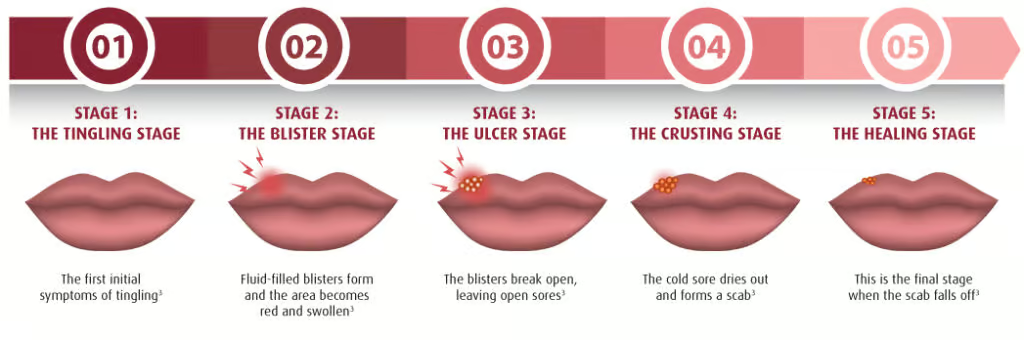
STAGES OF A COLD SORE
A cold sore, if left untreated, can last up to 14 days or longer.3 It typically progresses through 5 stages.3
COLD SORE TRIGGERS
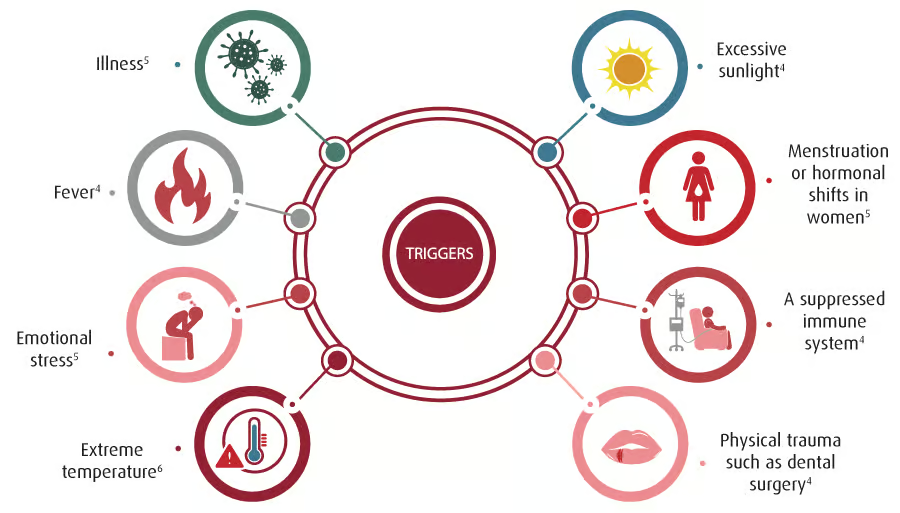
The herpes simplex virus (HSV-1) is the cause of the infection however the infection can be reactivated by triggers such as psychological and environmental factors.4,6 It may be helpful to identify what your cold sore triggers are so you can manage them to help avoid developing a cold sore.5
Here are some of the more common cold sore triggers:4,5,6